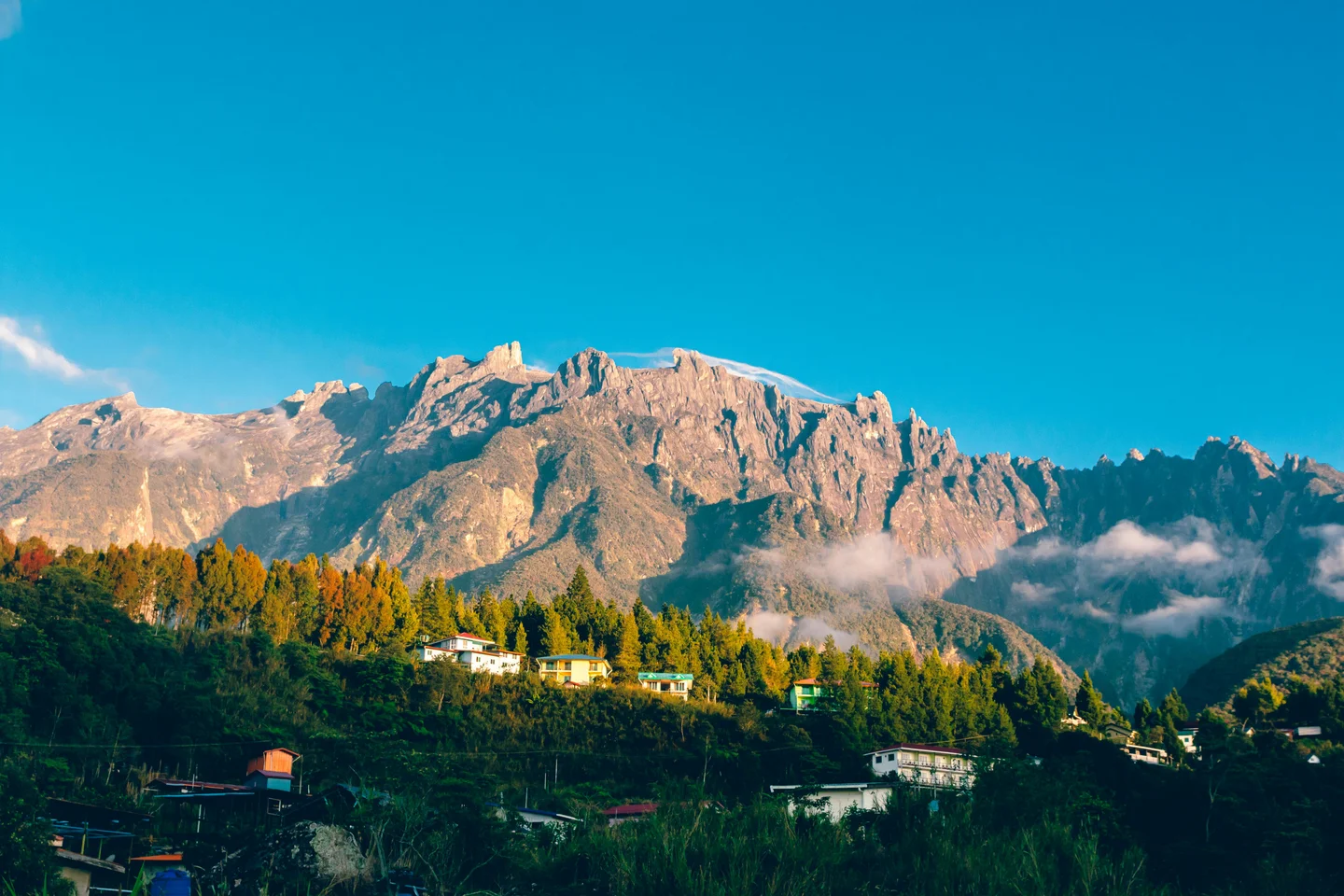

Mount Kinabalu Summit Climb
A breathtaking natural wonder in Borneo, perfect for outdoor enthusiasts and nature lovers.
Sorotan
Tentang
Granite Summit of the Majestic Bornean Giant
Nestled in Kinabalu Park, the iconic Mount Kinabalu stands tall at 4,095.2 meters above sea level. As Malaysia's highest peak and the highest mountain between the Himalayas and New Guinea, it holds prestigious "triple crown" UNESCO accolades: a UNESCO World Heritage Site, a UNESCO Global Geopark, and the UNESCO Crocker Range Biosphere Reserve. Beyond its geographic grandeur, the mountain holds deep spiritual significance, with local Indigenous communities regarding it as sacred through legendary folklore tales.
Mount Kinabalu features extraordinary biodiversity, housing over 4,500 species of plants and animals. Hikers pass through six distinct vegetation zones as they ascend. While subtle at lower elevations, the transition becomes striking after Layang Layang Hut, where alpine rock and stunted bonsai plants line the final leg leading to the Panalaban base area.
Whether you are tackling the classic trail, pushing your limits on the world's highest Via Ferrata, or watching the sunrise above a sea of clouds from Low's Peak, visiting Mount Kinabalu offers an unforgettable adventure in the heart of East Malaysia.
What to Do in Mount Kinabalu (UNESCO)
The standard Mount Kinabalu expedition is organized as a 2-Day, 1-Night Package. Climbers trek to the Panalaban base area (3,272 m) on the first day to rest before making the early morning push for the summit.
- The Summit Climb & Low's Peak: The final ascent begins at 2:00 AM in cold, windy conditions where temperatures drop as low as 1°C. Climbers pass through the Sayat-Sayat Checkpoint onto an expansive granite landscape before reaching Low's Peak (4,095.2 m) to capture photos with the iconic peak sign at sunrise. Reaching the summit earns a full-color official certificate, while non-finishing climbers receive a black-and-white certificate.
- Mountain Torq Via Ferrata: Located along the Panalaban rock face between 3,200 m and 3,776 m, Mountain Torq is Asia's first and the world's highest Via Ferrata. It features two routes—Low's Peak Circuit and Walk the Torq—allowing adventurers to navigate tightropes, wooden planks, and cable bridges anchored to vertical rock faces without needing prior mountaineering experience. Completing it awards a specialized Via Ferrata certificate.
- Kota Belud Trail: A challenging 1.1 km alternative route from Panalaban to the Sayat-Sayat Checkpoint requiring higher fitness, rope assists, and prior permission from Sabah Parks.
- Malaysia's Highest Postbox: Situated at Pendant Hut, climbers can purchase, write, and mail custom postcards stamped with an official altitude postmark.
How to Get to Mount Kinabalu (UNESCO)
Mount Kinabalu is conveniently accessible, situated 90 km from Kota Kinabalu City Centre along the main road connecting major Sabah districts including Kota Marudu, Sandakan, and Tambunan.
All climbers must assemble at the Kinabalu National Park Headquarters between 8:00 AM and 9:00 AM for mandatory registration, fee settlement, and guide assignment. From headquarters, climbers are transported via shuttle van to Timpohon Gate to check in at the official starting point.
Best Time to Visit & Planning Tips
Proper advance planning is essential due to high demand and strict park regulations:
- Strict Daily Quota: Access is limited to 165 climbers per day. Permits and accommodation sell out quickly, so book several months in advance through Sabah Parks, Sutera Sanctuary Lodges, Mountain Torq, or licensed travel agencies.
- Compulsory Mountain Guides: All climbers must be accompanied by a licensed local guide. Guide ratios are strictly enforced: 1 guide per 5 climbers on the standard Ranau Trail, and 1 guide per 3 climbers on the Kota Belud Trail.
- Porter Services: Porters are available at Park HQ for hire to transport heavy luggage ahead to the Panalaban huts. Climbers should carry a small daypack with water, snacks, warm clothing, and rain gear.
- Pacing & Acclimatization: Though technical skills are not required, a basic level of fitness is necessary. Climbers should maintain a steady, slow pace to acclimatize to high altitude and aim to reach Panalaban by 4:00 PM for rest and early dinner served at the Laban Rata Resthouse.